

Particle size testing guides formulation, stability, and regulatory compliance across pharmaceuticals, chemicals, and food. Method choice depends on target size, required metrics, throughput, and budget: sieving suits coarse powders, laser diffraction spans broad ranges, and DLS targets colloids. Proper sampling and dispersion preserve representativeness. Report D10/D50/D90 to capture fines, median, and coarse tails for specifications and batch-release. Routine validation, controls, and troubleshooting prevent drift and errors, and further sections outline procedures and decision rules.

Quick Test-Selection Guide: Particle-Size Testing for Pharma, Chemical, and Food
How should one choose a particle-size test for pharmaceutical, chemical, or food applications? The practitioner evaluates objectives first: regulatory compliance, process control Lab Alliance, product performance, or research.
Constraints follow: sample type, required size range, throughput, environment, and budget. Prioritize metrics that matter — mean diameter, distribution width, or proportion above/below critical thresholds — and select techniques that directly measure those.
Consider sample preparation demands and potential alteration of particles. Factor in validation needs, reproducibility, and available expertise; simpler methods may suffice for routine checks, while complex analyses fit development or troubleshooting.
Emphasize adaptability so methods can evolve with product lines. Document decision rationale to preserve operational freedom and guarantee consistent, defensible testing choices.
Method Comparison: Laser Diffraction, Sieving, and DLS – Range, Accuracy, and Cost
When selecting among laser diffraction, sieve analysis, and dynamic light scattering (DLS), practitioners balance each method’s measurable range, accuracy for the target particle sizes, and total cost of ownership. The comparison emphasizes strengths: sieving is low-cost and robust for coarse powders, laser diffraction covers broad distributions with moderate cost and quick throughput, and DLS delivers high sensitivity for nanometer-scale suspensions but with higher instrument and expertise demands.
Choice depends on required size regime, acceptable uncertainty, and operational budget, allowing operators to maintain analytical freedom while meeting product specifications.
- Sieving: excellent for >20–30 µm, simple, inexpensive, limited resolution for fines.
- Laser diffraction: 0.1–3000 µm, good accuracy for multimodal samples, mid–high cost.
- DLS: 1 nm–1 µm, high precision for colloids, sensitive to concentration and polydispersity.
Sample Preparation: Dispersion and Representative Sampling for Powders, Suspensions, and Foods
Sample preparation determines whether particle size results reflect true material characteristics or artifacts from agglomeration, segregation, or matrix effects. The process begins with representative sampling: randomized, stratified grabs or riffle splitting prevent bias from heterogeneous batches.
Powders require gentle deagglomeration—controlled milling, sonication, or wet dispersion—while avoiding size reduction. Suspensions need surfactant selection, pH control, and shear optimization to stabilize primary particles without altering them.
Foods often demand matrix separation, enzymatic digestion, or density-based fractionation to isolate particles of interest. Drying methods and solvent choice must prevent re-agglomeration or dissolution.
Validation of procedures through repeatability checks and orthogonal techniques confirms that preparation preserves native size distributions. Documentation of each step guarantees freedom to reproduce and trust results.
Interpreting Particle-Size Data: D10/D50/D90, Specs, and Batch-Release Rules
Interpreting particle-size data requires focusing on key percentiles—D10, D50, and D90—that succinctly describe distribution tails, median, and spread and that underpin specifications and batch-release decisions.
The author explains that D50 indicates the central tendency, while D10 and D90 bound fines and coarse fractions; together they inform process control, downstream performance, and regulatory acceptance.
Specifications are usually expressed as limits or ranges for these percentiles, sometimes combined with pass/fail rules or conditional acceptance zones.
Batch-release rules translate analytical outputs into actions: accept, investigate, or reject, preserving product integrity and freedom to operate.
- Define percentiles and limits clearly.
- Apply logical, documented pass/fail criteria.
- Record decisions and rationales for traceability.
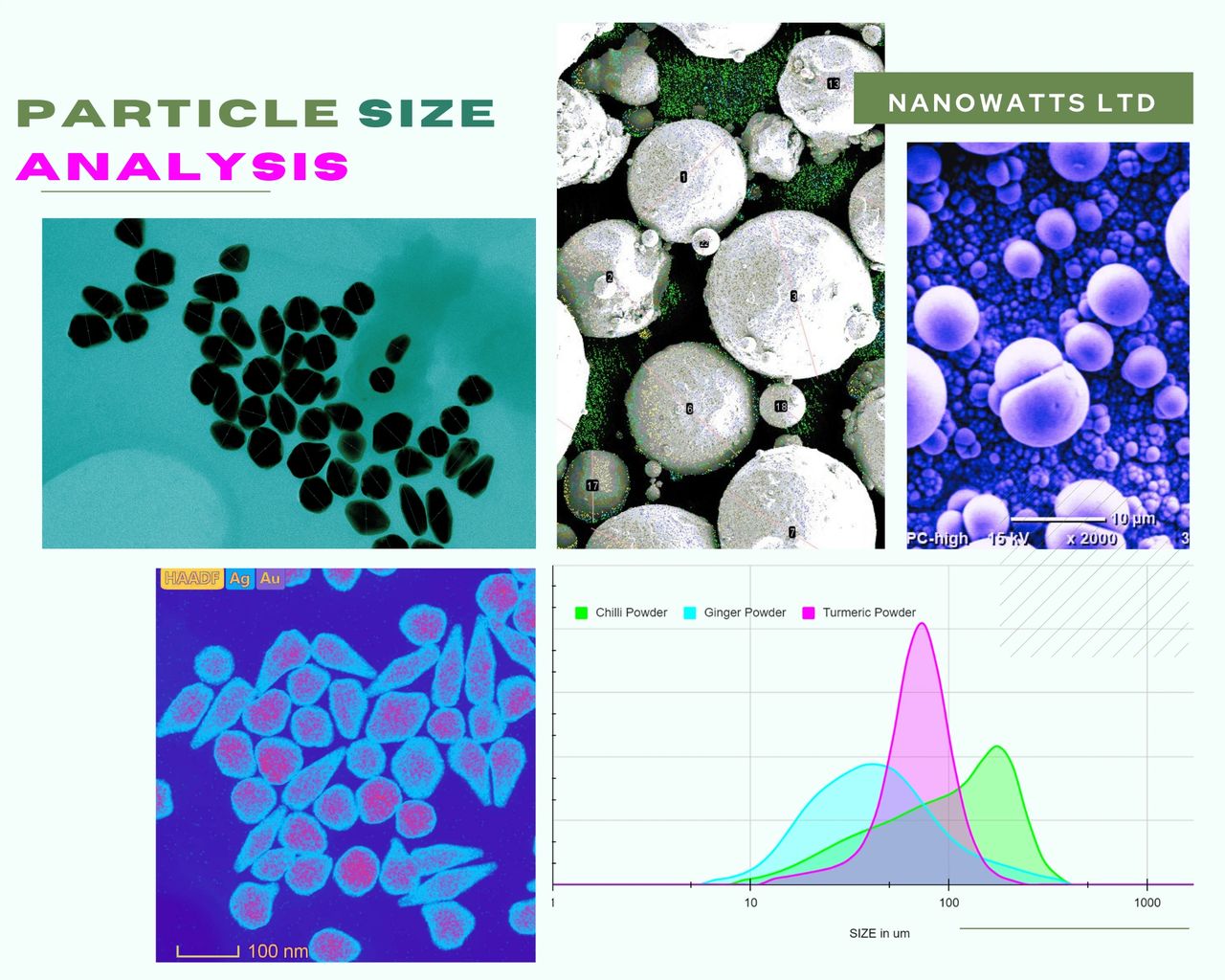
Common Particle-Size Problems and Fixes: Validation Checks and When to Escalate
Although routine particle-size measurements often proceed without incident, a limited set of recurring issues—clogging, instrument drift, poor dispersion, inappropriate measurement settings, and operator errors—accounts for most invalid or questionable results and can usually be resolved through targeted validation checks.
Validation starts with basic system suitability: blank runs, reference standards, and verification of optical or scattering alignment. Dispersion protocols require reproducible media, sonication, or surfactant use and verification by microscopy.
Drift is tracked by control charts and prompt recalibration. Clogging and carryover demand cleaning logs and filter inspections.
When repeated checks, cross-method comparison, or out-of-spec results persist, escalate to method review, instrument service, or stability studies.
Decisions should prioritize analytical freedom balanced by documented traceability.
Conclusion
Choosing the appropriate particle-size test requires balancing method range, accuracy, cost, and sample nature. Proper dispersion and representative sampling underpin reliable results across powders, suspensions, and foods. Interpreting D10/D50/D90 and establishing clear specs and batch-release criteria enable consistent quality control. Routine validation checks and troubleshooting address common issues, while escalation to specialized analysis guarantees root-cause resolution for persistent anomalies, supporting regulatory compliance and product performance.